Tracking Technological Upgrades in Interactive Dealer Games Across Established British Casino Networks
Written by Jakob Jenkins · Sep 25, 2026

Tracking Technological Upgrades in Interactive Dealer Games Across Established British Casino Networks
Established British casino networks continue to integrate advanced video compression standards alongside low-latency streaming protocols that support multiple camera angles and interactive overlays in live dealer environments, while September 2026 marks the scheduled rollout of next-generation encoding systems across several major operators that connect directly to enhanced 5G infrastructure throughout the UK.
Evolution of Video Delivery Systems
Operators have shifted from standard HD feeds to 4K resolution streams supported by adaptive bitrate algorithms, and these changes allow seamless transitions between table views without interrupting player sessions; researchers at academic institutions in Canada have documented similar patterns in North American markets where frame rates now exceed 60 frames per second in controlled test environments. Data from the Malta Gaming Authority indicates that packet loss rates in cross-border streaming have dropped below 0.5 percent following the adoption of edge computing nodes positioned closer to end-user devices.
Multi-angle camera arrays now incorporate depth-sensing technology that enables augmented reality overlays, yet these features require synchronized synchronization with backend game servers to maintain regulatory compliance on bet placement timing.
Integration of Artificial Intelligence Tools
Dealers interact with AI-assisted recognition systems that flag potential irregularities during card shuffles and roulette spins, and these tools process visual data in real time before transmitting alerts to floor supervisors. Industry reports compiled by the European Gaming and Betting Association highlight how machine learning models trained on historical session data have reduced verification delays by approximately 40 percent in participating networks.
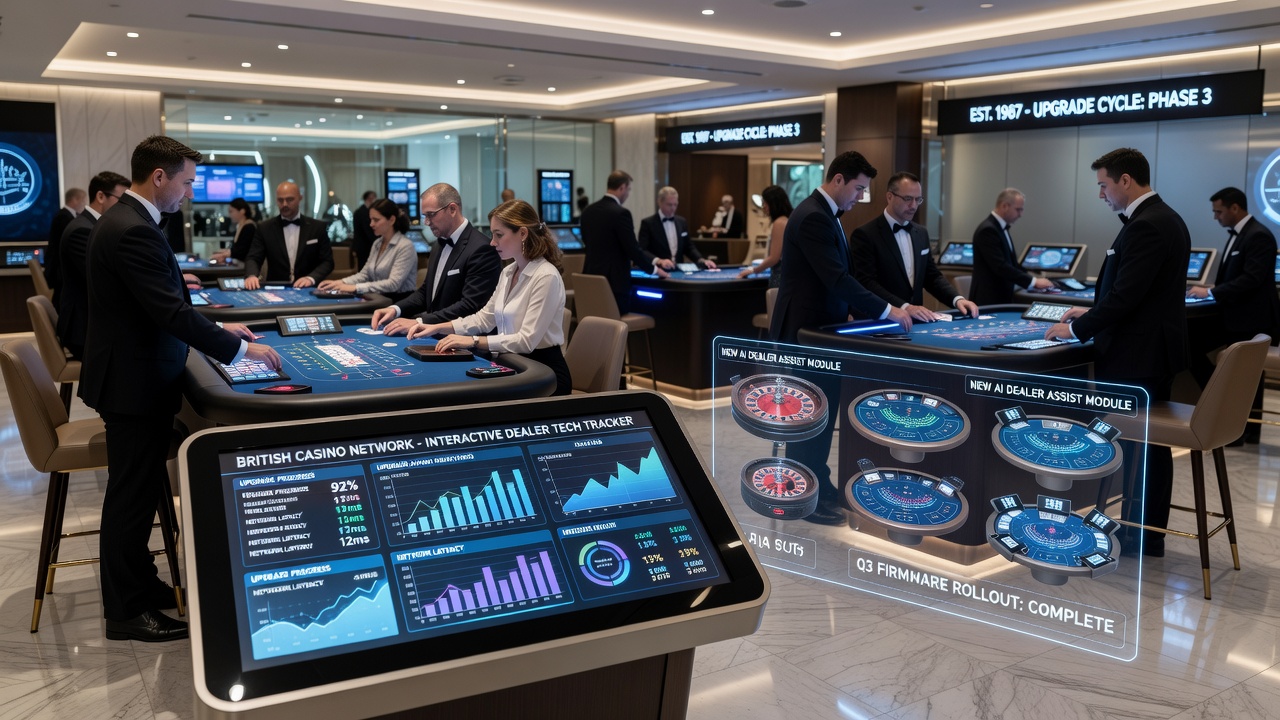
Voice modulation software now assists dealers in maintaining consistent communication across different language preferences, while biometric authentication layers verify player identity before each session begins; observers note that such measures align with broader security frameworks already deployed in Australian regulatory jurisdictions.
Mobile Platform Enhancements
Applications on both iOS and Android devices now support picture-in-picture modes that keep dealer feeds visible during navigation between lobby screens and account management sections, and touch-optimized interfaces reduce input lag to under 50 milliseconds according to internal testing metrics shared by network operators. Hardware acceleration for video decoding has become standard across flagship smartphone models released since 2025, enabling longer session durations without battery drain exceeding baseline thresholds.
Cross-device continuity features allow players to switch from desktop to tablet mid-session while preserving game state, and this capability stems from cloud-based session management protocols that synchronize data across multiple endpoints simultaneously.
Security and Compliance Infrastructure
Encryption protocols have advanced to include post-quantum algorithms in pilot programs scheduled for wider deployment by late 2026, and these upgrades address emerging computational threats identified in technical papers from research consortia based in the United States. Transaction logging systems now capture every interaction at sub-second granularity, which supports audit trails required by oversight bodies operating outside the UK framework.
Regular penetration testing conducted by independent firms reveals that network segmentation between dealer studios and player databases continues to limit exposure surfaces effectively.
Conclusion
Collectively these developments illustrate how British casino networks maintain alignment with global technological trajectories in interactive dealer formats, and continued monitoring through industry associations and regulatory data sources from varied regions will track further iterations as infrastructure evolves.